
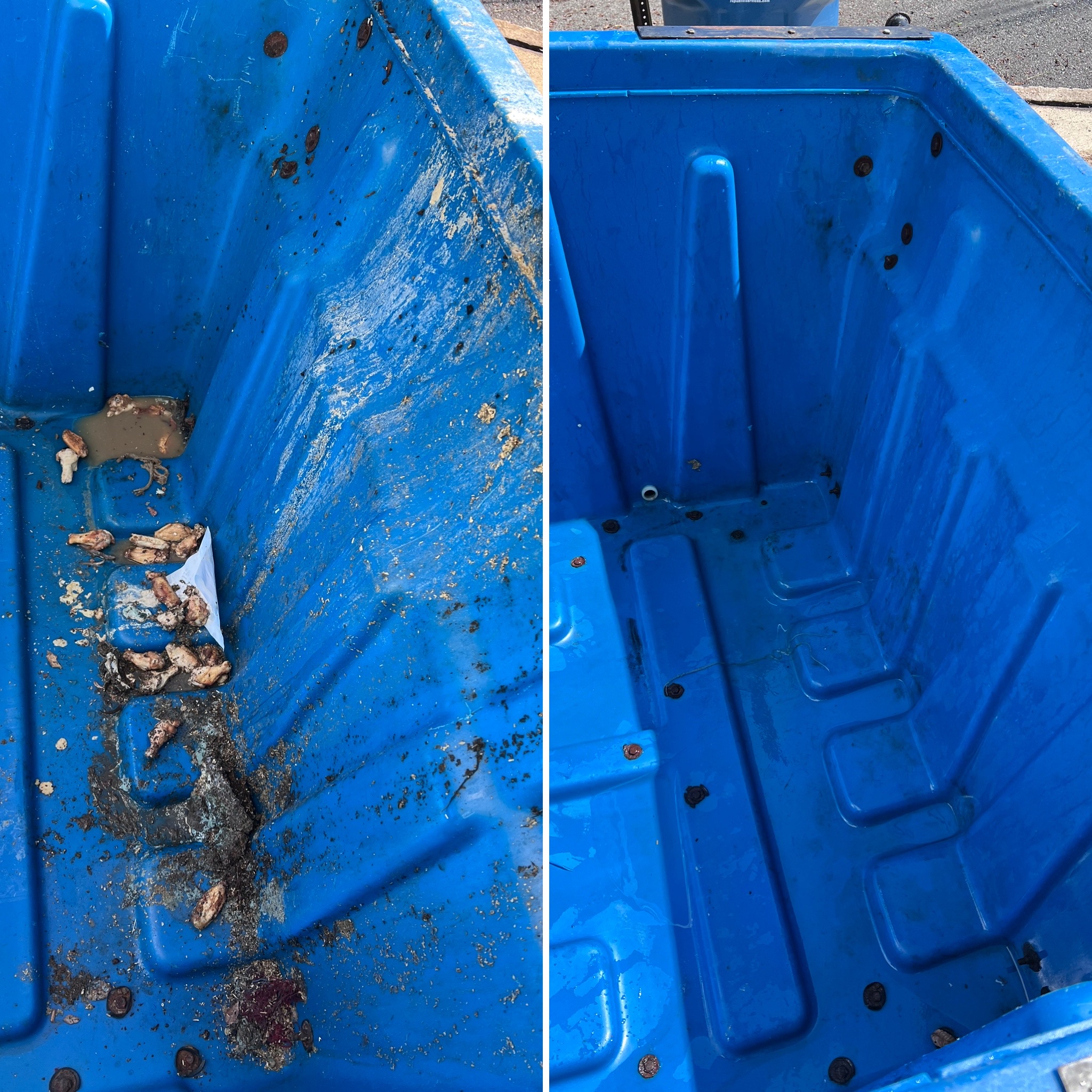
When restaurant owners and facility managers think about food safety and customer satisfaction, they usually focus on the kitchen line, the dining room, or the rest of the floor. But the most critical test of your facility’s hygiene isn’t happening inside—it’s sitting right outside your backdoor at the dumpster pad.
Every week, trash trucks empty commercial dumpsters, but they rarely leave them clean. Caked-on grease, rotting produce, and liquid runoff stay behind, creating an ideal breeding ground for dangerous bacteria like Shigella and destroying your business’s reputation before customers even step inside.
One of the most dangerous pathogens lurking around dirty commercial waste bins is Shigella, a highly infectious bacterium that causes severe gastrointestinal illness (shigellosis).
Shigella thrives in environments where organic food waste decomposes, and it spreads rapidly through flies, pests, and human contact:
Trash Trucks Leave Organic Residue: Mechanical arms lift and dump containers, but sticky, decomposing food waste clings to the bottom and inner corners.
Flies and Pests Act as Vectors: Houseflies and fruit flies land directly on the Shigella-contaminated waste inside the dumpster pad.
Pests Carry Germs Inside: Those same flies fly through backdoor kitchen entrances, landing on food prep counters, utensils, and clean dishware.
Cross-Contamination via Staff: Employees touching dirty dumpster lids, handles, or enclosure doors can easily bring Shigella right back to food preparation areas if handwashing isn’t 100% airtight.
Humans are hardwired to evaluate safety through sight and smell. Long before a customer tastes a meal or inspects a retail shelf, their subconscious mind uses environmental cues to form an instant judgment.
If an employee or customer catches a whiff of sour trash or sees a grease-stained, rotting dumpster near your building, a psychological chain reaction occurs:
Sensory Priming: Bad smells trigger an involuntary repulsion response. When someone smells foul odor, their brain immediately primes their palate for negative experiences.
The Taste Connection: Studies show that foul ambient odors negatively influence perceived taste. A customer who smelled dirty garbage on their way into a restaurant will often report that their food tastes “off” or less fresh.
Employee Morale & Standards: When staff members arrive through a back entrance greeted by a foul-smelling dumpster pad, it sets a low baseline for cleanliness. If management accepts filth outside, staff naturally drop their standards inside kitchens, dining areas, and restrooms.
Standard garden hoses and chemical sprays can’t remove baked-on grime or eradicate bacteria colony mats. To protect your business, staff, and customers:
Eliminate Pest Attraction: Removing grease trails and rotting sludge starves flies, rodents, and insects before they infest your building.
Neutralize Bad Odors at the Source: High-temperature ($200^\circ\text{F}$) pressure washing breaks down organic oils and kills odor-causing bacteria on contact.
Elevate Brand Reputation: Clean dumpster pads reflect an uncompromising commitment to hygiene from the back alley to the front door.
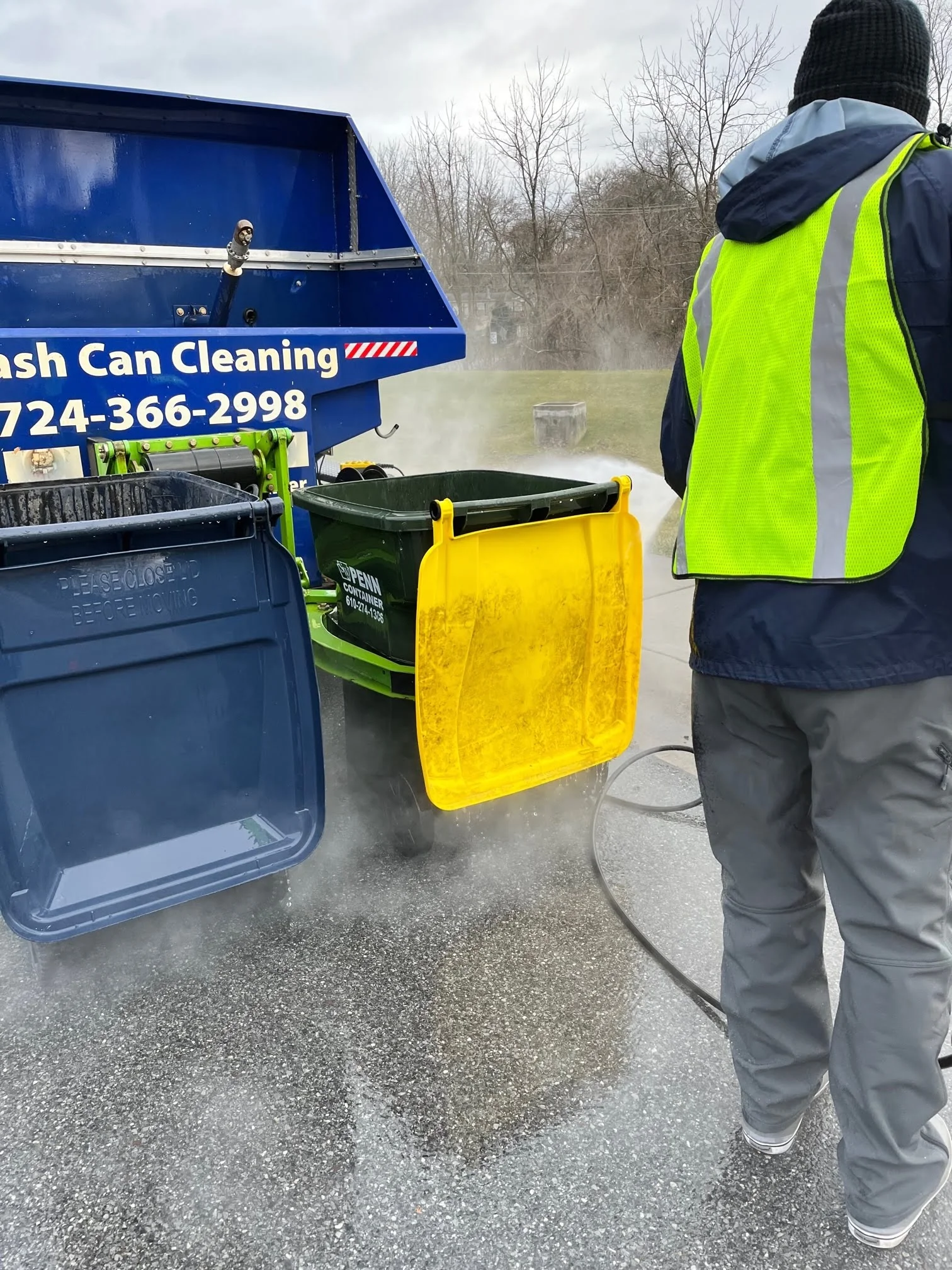
We use only environmentally friendly, biodegradable, certified cleaning solutions that support a healthy and safe environment for your family, friends, and employees. Our process eliminates offensive odors and helps remove bacteria such as tuberculosis, strep, staph, E. coli, salmonella, and listeria. Clean trash bins and dumpsters are less likely to produce foul odors or attract pests and rodents.