We tend to think of our trash cans as simple holding zones for things we no longer want. We toss in leftover raw chicken packaging, spoiled milk, baby diapers, or lawn clippings, tie up the bag, and assume the mess is gone.
However, scientific studies on household hygiene—including landmark surface research from Lysol Pro Solutions and global hygiene councils—tell a much dirtier story.
Even when you use plastic trash bags, microscopic leaks, food condensation, and tear-points allow bacteria to multiply inside your cans at an alarming rate. Here is a look at what is actually growing inside your trash bins and why regular bin sanitizing is a health necessity.
 By the Numbers: How Dirty Is a Trash Can?
Studies analyzing bacteria counts on everyday household surfaces have found that garbage cans regularly rank among the top 5 dirtiest spots in both homes and commercial spaces:
411+ Bacteria Per Square Inch: Typical indoor wastebaskets average hundreds of bacterial colonies per square inch—often outranking bathroom countertops, dish towels, and kitchen tabletops.
Hundreds of Thousands of Total Germs: A comprehensive hygiene study conducted by Lysol Pro Solutions tracked germ migration and surface contamination, concluding that everyday touchpoints—including garbage bins—harbor hundreds of thousands of live bacterial units.
Outdoor Bins Are Exponentially Worse: Outdoor wheelie bins exposed to summer heat act as natural incubators. Millions of bacterial colonies, fungal spores, and viral vectors can double in population every 20 minutes under hot weather conditions.
“Objects we least suspect can often be culprits for spreading germs… Using effective cleaning and disinfecting protocols helps break the chain of transmission.”
— Lysol Pro Solutions Hygiene Study
Trash bins provide three things bacteria love most: moisture, organic food sources, and dark shelter. Swabbing a typical unwashed trash can reveals several dangerous pathogens:
Salmonella & E. coli: Originating from raw meat juice, egg shells, and pet waste, these intestinal bacteria cause severe food poisoning and can survive on hard plastic surfaces for days.
Listeria Monocytogenes: Commonly found on decaying foods, Listeria thrives in moist environments and poses serious risks to young children and pregnant mothers.
Mold & Fungi (Candida species): Trapped moisture creates fungal colonies that produce toxic spores, triggering respiratory issues, allergies, and lingering foul odors.
Norovirus: Highly contagious stomach flu viruses can live on hard trash can lids and handles, spreading quickly to anyone who touches the bin before eating or preparing food.
Many homeowners ask: “If I use garbage bags, why does my bin still get dirty?”
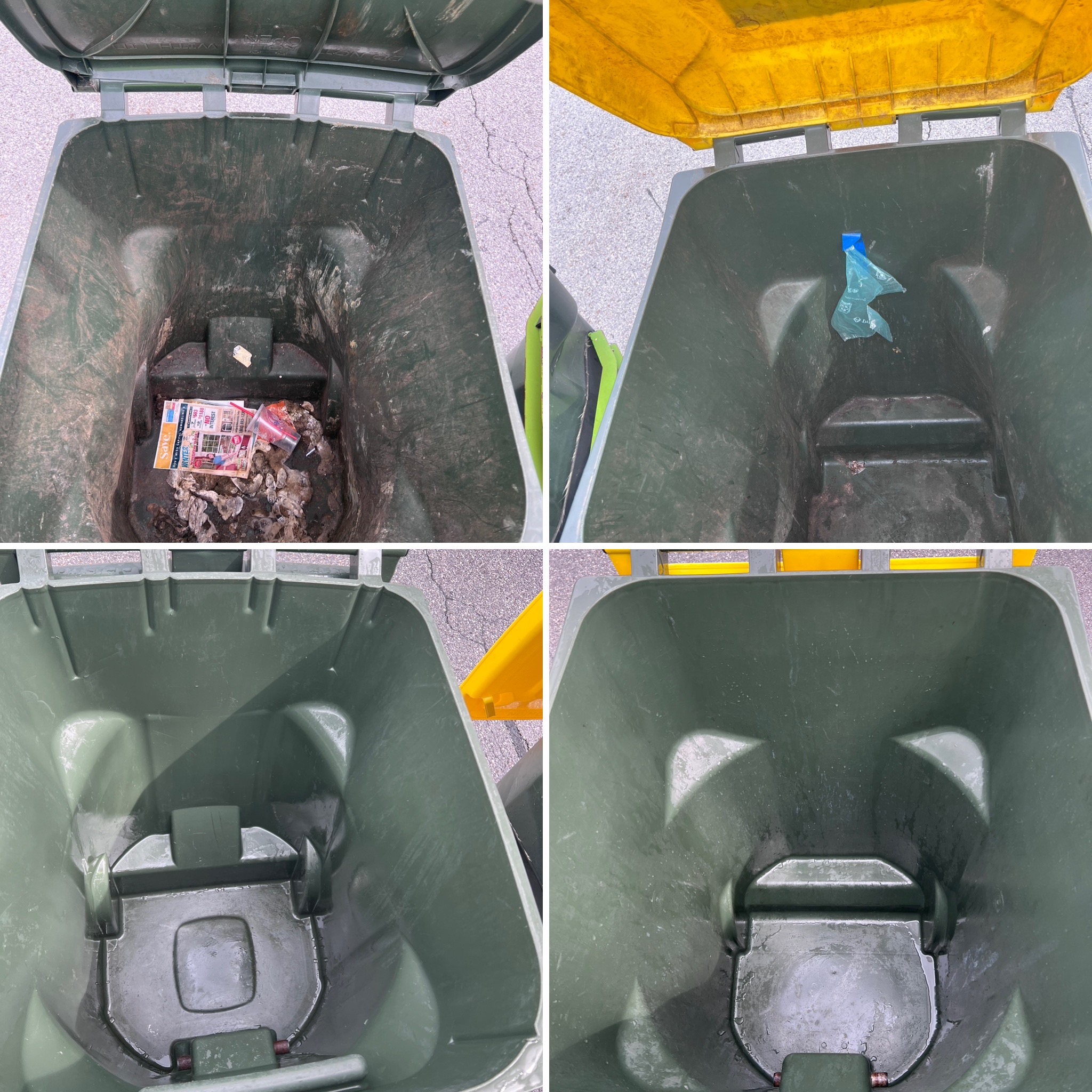
Plastic trash bags are porous and prone to micro-tears from sharp cardboard, bones, or heavy loads. As garbage settles, liquid—often referred to as “trash juice”—seeps out and pools at the very bottom of the can.
When you open the lid, heat and airflow pull invisible airborne bacteria and odors right into your home, garage, or driveway.
Rinsing your bins with a garden hose moves contaminated water into nearby storm drains, which pollutes the local watershed while doing little to actually kill bacteria.
To eliminate germs effectively:
Never Touch Handles Unwashed: Wash your hands immediately after dragging outdoor cans to the curb or changing indoor liners.
Disinfect Touchpoints: Spray down lids, handles, and rim areas with standard disinfectant spray between collections.
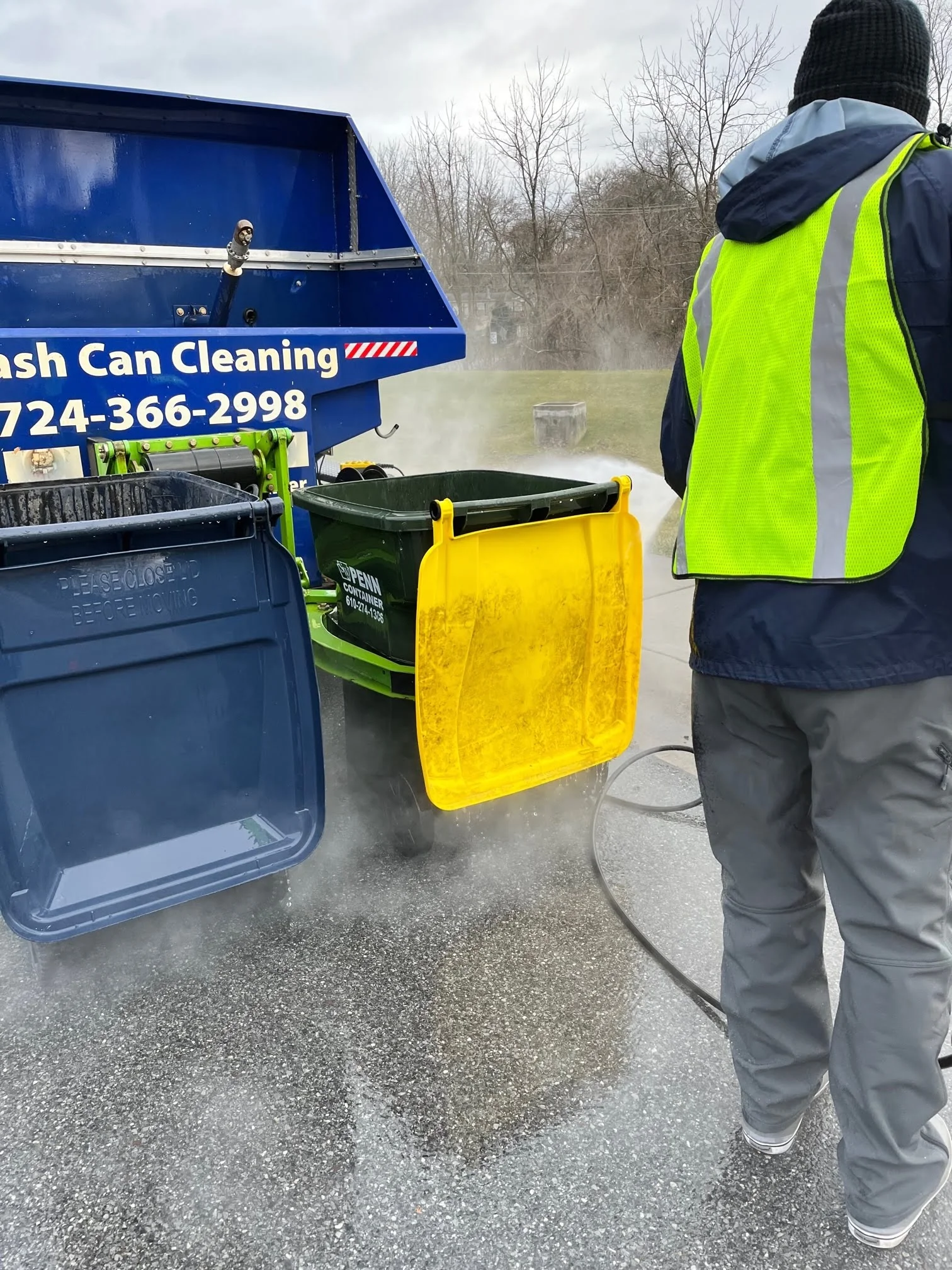
Use Professional Hot-Water Sanitization: Commercial trash can cleaning systems use 190-200 degree hot water, at high-pressure and eco-friendly sanitizers to blast away 99.9% of bacteria, fungus, and odor-causing sludge without polluting local storm drains.