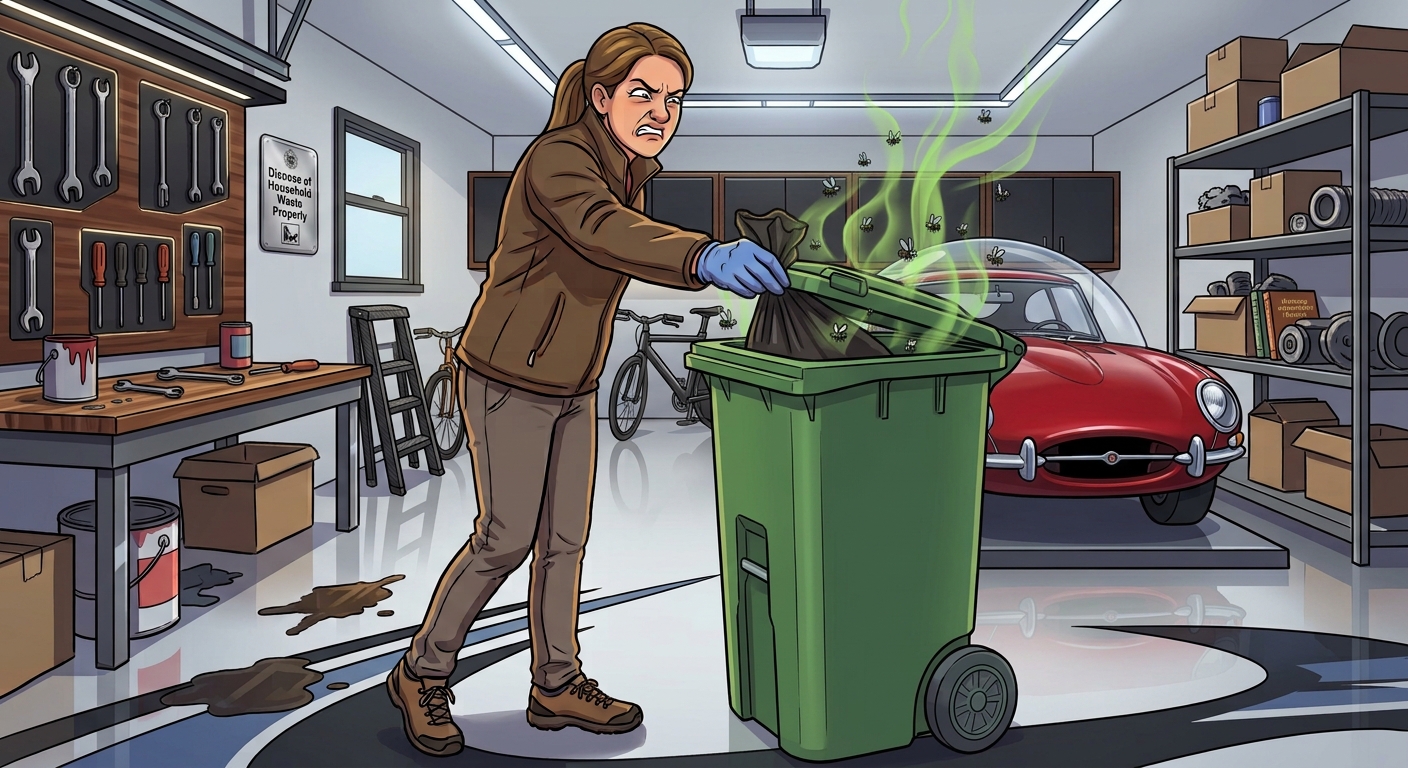
When you walk past your trash or recycling cans in the driveway or open your garage on a warm afternoon, a unpleasant smell is usually the first sign of trouble. But behind that stench lies something far more serious than lingering odors: a concentrated breeding ground for dangerous bacteria and pathogens.
Every single week, household waste from homes in Oxford, Avondale, and Kennett Square goes straight into plastic trash and recycling bins. From poultry juices to cat litter, the everyday items we toss away transform standard waste containers into ideal incubators for disease-causing germs.
Here is a look at what is actually living inside your residential bins, why spraying them down with a garden hose falls short, and how high-temperature steam sanitizing keeps your home and family safe.
Think about what goes into your residential garbage and recycling cans over the course of a single week:
Raw Meat & Poultry Packaging: Juices from raw chicken, beef, or pork packages leak through trash bags directly onto the bottom of the bin. This liquid harbors high levels of bacteria like Salmonella, E. coli, and Listeria monocytogenes, which thrive in dark, warm environments.
Dirty Diapers: Even when tightly wrapped, diapers release fecal bacteria like Escherichia coli (E. coli) and rotaviruses into the air and onto the inner walls of your bin.
Pet Waste & Cat Litter: Dog waste bags and scooped cat litter contain harmful parasites and bacteria, including Toxoplasma gondii and Staphylococcus aureus (Staph).
Unrinsed Food Containers: Milk jugs, yogurt cups, and pet food cans left in recycling bins ferment rapidly, providing the exact nutrients mold, bacteria, and flies need to reproduce.
Once these liquids leak into the corners of your plastic bins, they form a sticky biofilm that hosts millions of bacteria per square inch.
When faced with a dirty bin, many homeowners in Oxford or Avondale reach for the garden hose and a bucket of household soap. While this might wash away loose debris, cold or lukewarm hose water does not kill bacteria.
Cold water (typically between 50 and 70 degrees Fahrenheit lacks the heat required to break down tough grease or destroy bacterial cell walls. Pathogens like Staphylococcus aureus and Listeria are extraordinarily resilient:
Listeria Resilience: Listeria can survive and even multiply in cool environments, meaning a cold-water rinse simply spreads the bacteria around the bin surface rather than destroying it.
Staph Biofilms: Staph bacteria form protective matrix layers (biofilms) on plastic surfaces that cold water and standard dish soap cannot penetrate.
When you blast the inside of a dirty bin with a high-pressure hose nozzle, the water bounces off the curved plastic walls and splatters directly onto your hands, clothes, shoes, and driveway. Instead of eliminating the bacteria, cold-water washing transfers E. coli and Salmonella onto your driveway and shoes, where it gets tracked straight into your kitchen or living room.
To eliminate dangerous pathogens without relying on harsh chemical runoff, you need one critical factor: extreme heat.
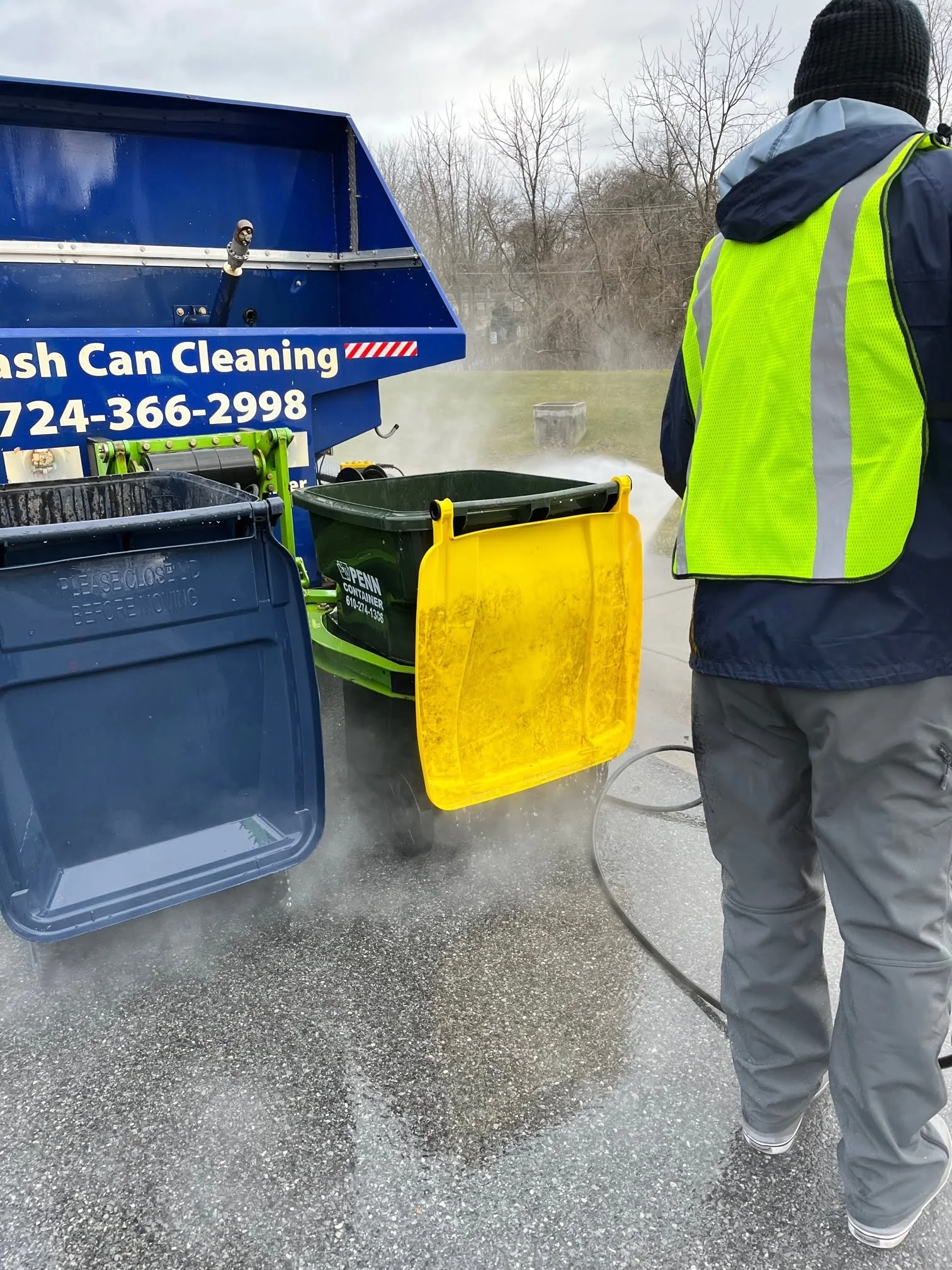
At Crystal Clean Canz, our professional cleaning trucks use specialized equipment to heat water to 190 degrees Fahrenheit. Here is why temperature makes all the difference:
Thermal Disinfection: Water heated to 190 degrees Fahrenheit denatures the proteins inside bacteria and viruses, along with our sanitizers, we are killing 99.9% of pathogens like E. coli, Listeria, Salmonella, and Staph on contact.
Grease & Biofilm Dissolution: Steam and boiling water melt away the sticky fats, poultry oils, and organic films that cold water leaves behind.
Zero Chemical Fumes: High-heat steam sanitizes thoroughly using pure water, keeping your family and pets safe from harsh bleach or synthetic chemical residue.
Total Wastewater Containment: Our automated wash heads spray the insides of the cans and the dirty wash water is captured inside our truck’s holding tank. Zero contaminated water, bacteria, or grease ever touches your driveway, lawn, or local storm drains in Oxford or surrounding towns.
Don’t let raw meat juices, pet waste, or dirty diapers compromise your family’s health and home hygiene.
Whether you need regular monthly maintenance or a quick service refresh in Oxford, Avondale, or Kennett Square, Crystal Clean Canz makes keeping your trash and recycling bins sanitized, safe, and fresh completely effortless!
Our recurring maintenance plans automatically include 1 Trash Can + 1 FREE Recycle Can on every visit.
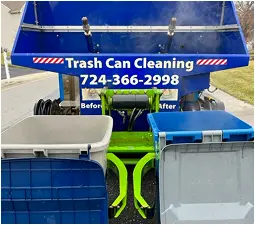
We use only environmentally friendly, biodegradable, certified cleaning solutions that support a healthy and safe environment for your family, friends, and employees. Our process eliminates offensive odors and helps remove bacteria such as tuberculosis, strep, staph, E. coli, salmonella, and listeria. Clean trash bins and dumpsters are less likely to produce foul odors or attract pests and rodents.